Why Gym Mirrors Are Slightly Curved, and What It Does to Your Photos
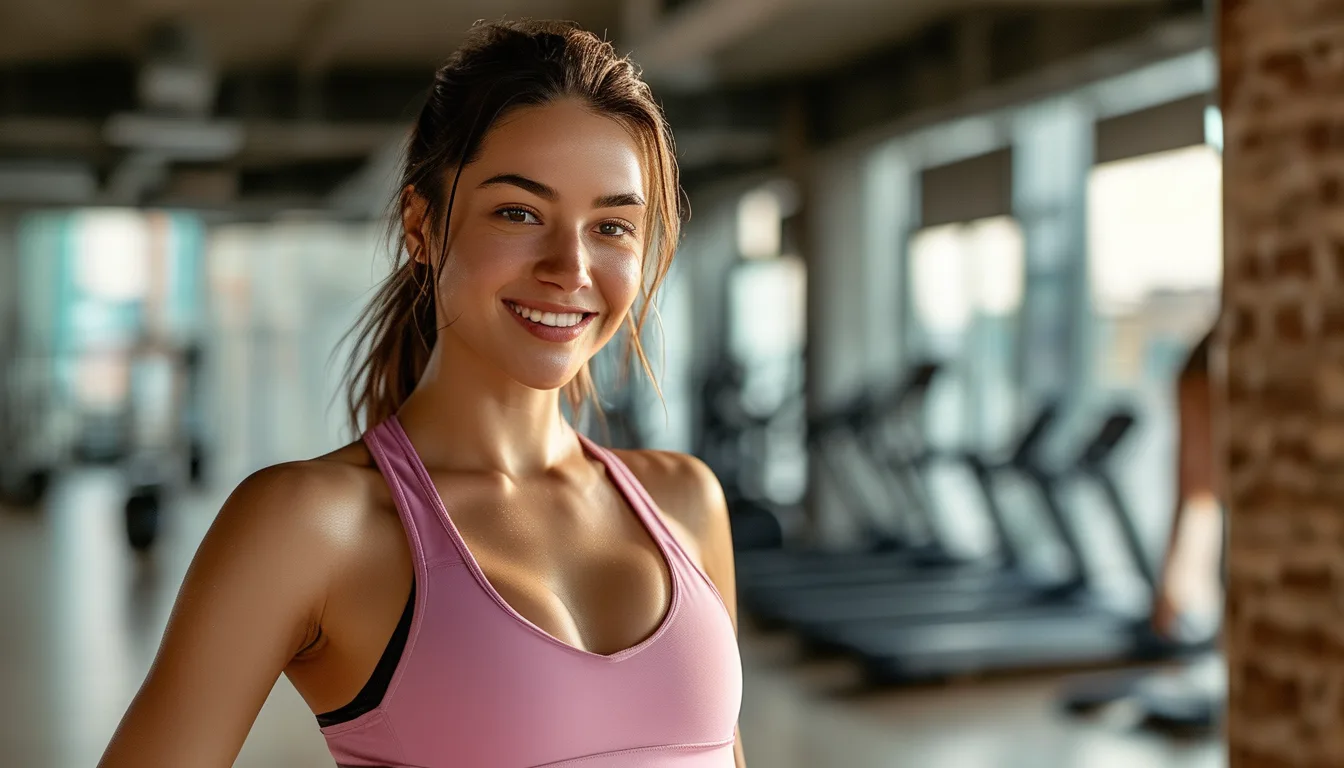
Quick Answer: Many commercial gym mirrors have a very slight curvature (sometimes intentional, sometimes a byproduct of large-panel installation and mounting) that can subtly stretch or compress a reflection depending on where you stand relative to the mirror’s surface, which is a real optical reason mirror photos can look different from how you look elsewhere.
A lot of people assume a bad mirror photo reflects something they did wrong that day. Often it’s the mirror itself doing something slightly different than a flat, true reflection.
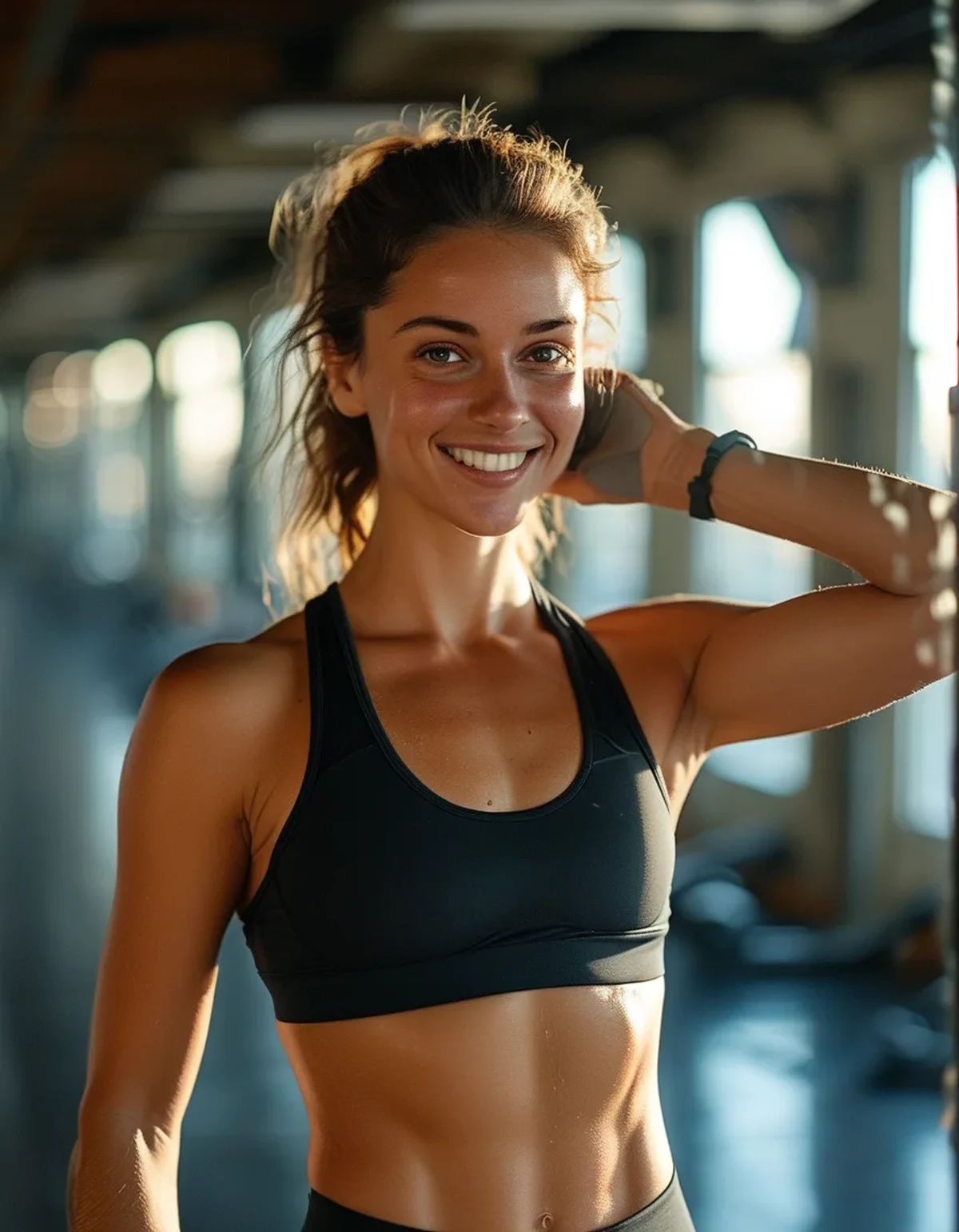
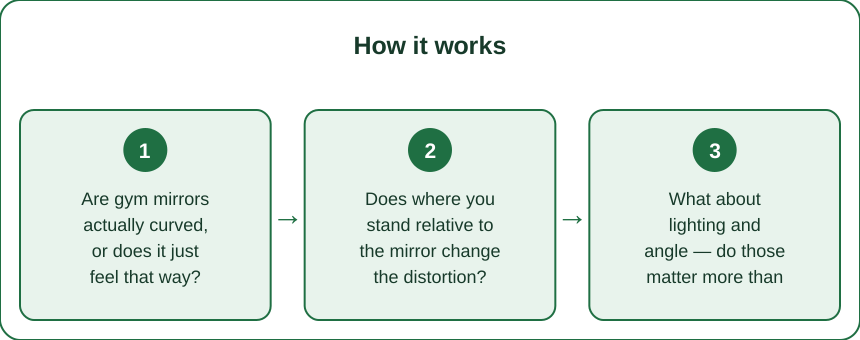
Are gym mirrors actually curved, or does it just feel that way?
Some genuinely are — large mirror panels, especially budget installations covering full gym walls, aren’t always perfectly flat, and even a very slight, unintentional curve (from mounting pressure, panel seams, or manufacturing tolerance) can introduce a mild distortion across a large reflective surface. This isn’t a universal industry practice, but it’s common enough in large-format gym mirror installations that it’s a real, documented phenomenon, not just perception.
Does where you stand relative to the mirror change the distortion?
Yes, meaningfully. Standing closer to a slightly curved mirror amplifies any distortion, while standing farther back reduces it, similar to how a slightly warped car side mirror shows more distortion up close than from a distance. If a specific gym’s mirror photos consistently look off, testing a photo from a bit farther back before assuming it’s about your body is a reasonable first troubleshooting step.
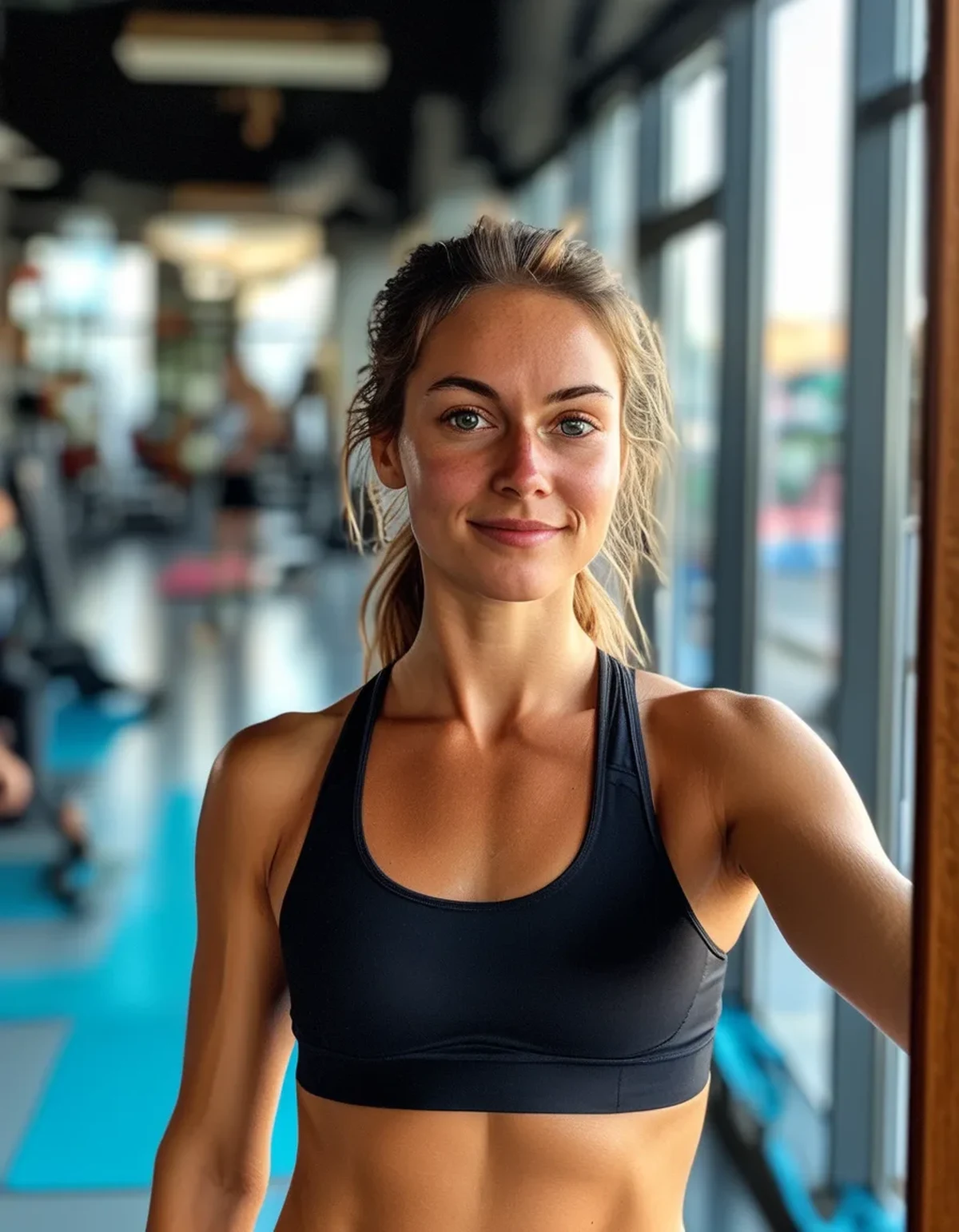
What about lighting and angle — do those matter more than the mirror itself?
Often, yes — overhead gym lighting creates harsher shadows than the diffused, front-facing lighting most people are used to seeing themselves in (bathroom vanity lighting, natural window light), which changes how muscle definition and body shape read even with an identical, undistorted reflection. A slightly upward or downward phone angle also meaningfully changes perceived proportions, often more than the mirror’s actual curvature does.
Myth vs Fact: Gym Mirror Photos
Myth: If a gym mirror photo looks different than expected, it’s an accurate assessment of how you actually look. Fact: Mirror curvature, harsh overhead lighting, and phone angle all introduce real optical variables that can distort a reflection compared to more neutral lighting and viewing conditions elsewhere.
Myth: All gym mirrors are precision-flat and photograph identically to how you’d look in a well-lit portrait. Fact: Large mirror panel installations, lighting setup, and mounting tolerances vary enough between gyms that photo results genuinely differ from location to location.
FAQ: Gym Mirror Photos, Answered
How can I take a more accurate gym mirror photo?
Stand a bit farther back from the mirror, aim for eye-level phone angle rather than up or down, and if possible use a spot with more even lighting rather than directly under a single harsh overhead fixture.
Why do some gym mirror photos look better than others taken minutes apart?
Small shifts in stance, angle, and which specific light fixture is overhead at that spot in the gym can all change the result meaningfully, even within the same short session.
Is it worth comparing gym mirror photos to track physical progress over time?
It’s more reliable to use a consistent spot, angle, and lighting setup each time (or better, a separate, more neutral progress-photo setup) rather than random gym mirror snapshots, since the variables discussed here can make progress look inconsistent even when it isn’t.
TL;DR:
- Some gym mirrors have a genuine slight curve from large-panel installation or mounting
- Standing closer amplifies any distortion; standing back reduces it
- Harsh overhead lighting and phone angle often affect the photo more than mirror curvature does
- Use a consistent spot, angle, and lighting setup for reliable progress photo comparisons
Next time a gym mirror photo looks off, try backing up a step and checking the lighting before assuming anything changed about you.
Keep Reading
This article is for general informational and styling purposes only. Fit, sizing, and product availability may vary.