Why Can You Not Judge Left-Right Symmetry in a Mirror?

Quick Answer: A mirror reverses left and right, and that reversed image is the one you know best. Any real asymmetry — a higher shoulder, a hip that shifts — reads as normal in the mirror because you learned your body through the flipped version, which is exactly why a photo or video of the same posture looks wrong.
This is why you can look fine in the mirror and off in every photo anyone takes of you.
Neither image is lying. They are different reference frames.
This is general information, not medical advice.
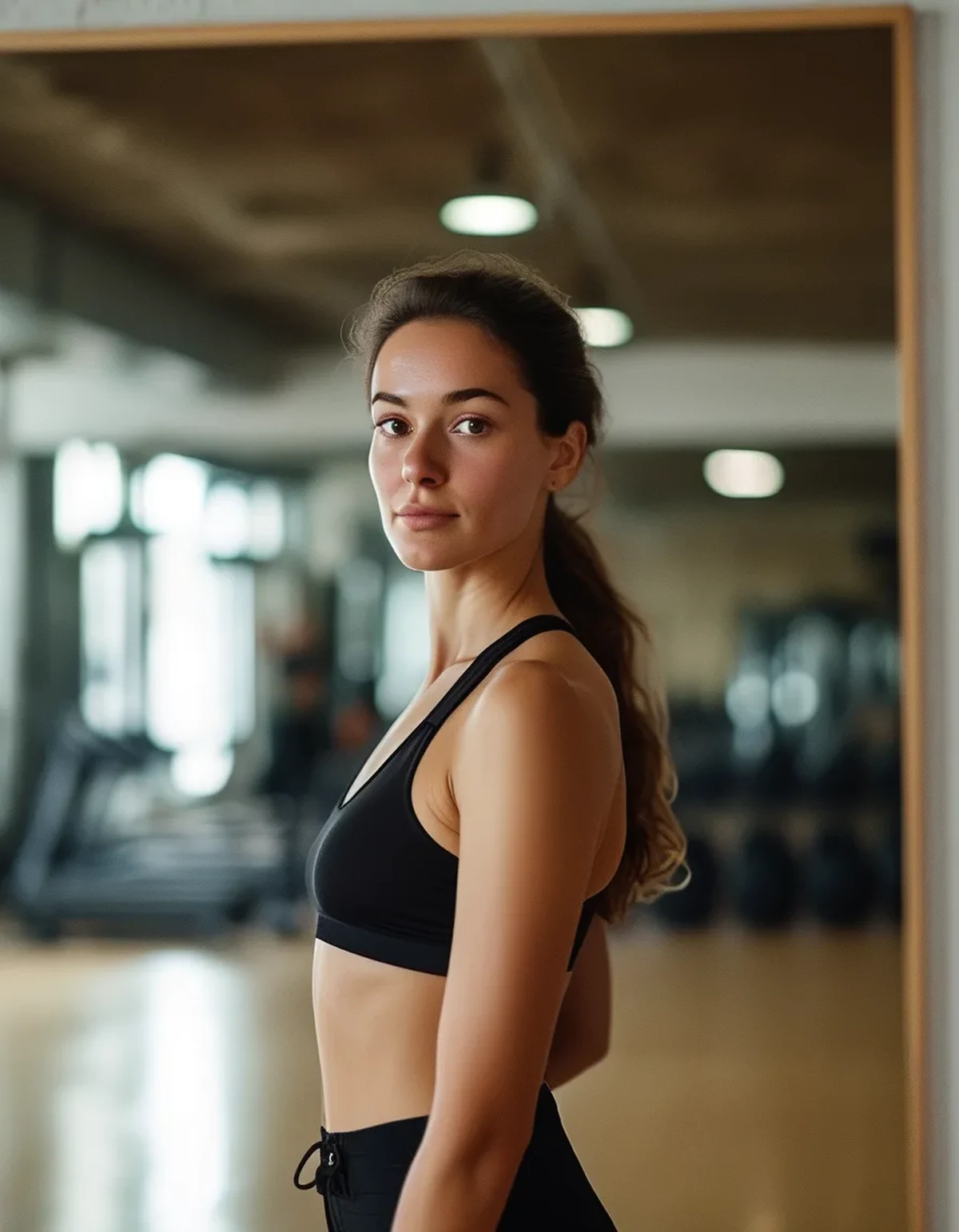
What is actually happening when you look in a mirror?
The mirror does not flip you top to bottom or left to right in any physical sense — it reverses front to back, along the axis pointing at the glass. The result reads to you as a left-right swap, because the way you interpret the image is by imagining yourself turned around.
Which means the version of your body you have looked at ten thousand times is the mirror-reversed one. It is your reference. It is the face and frame that feel like you.
Everyone else has only ever seen the unreversed version, and so has every camera.
This is the entire reason photos feel subtly wrong. Research on the mere-exposure effect found people prefer the mirror-image version of their own face while their friends prefer the true version — each group preferring the one they know. Nobody is right; the familiarity is doing the work.
So which one is the real me?
The photo, in a strict sense. But the mirror version is the one you have built your self-image around, so calling the photo real is not much comfort. What matters practically is knowing which frame you are using when you assess something.
Why does this specifically break symmetry checks?
Because asymmetry has a direction, and you have been checking it in a frame where the direction is inverted.
Say your right shoulder genuinely sits a centimetre lower. In the mirror it appears on your left, and it has appeared there every time you have looked since you were a child. You have not learned to see it as an asymmetry — you have learned it as what your body looks like.
A photo puts it back on the right, and suddenly the imbalance is visible, because it is now in a position your brain has no history with.
This is why people are consistently surprised by video of themselves lifting. The bar path drifting toward one side, the hip shift out of the hole, the head tilt — these were all present in the mirror. They just did not register as errors, because the mirror version is the baseline against which errors are measured.
Does this mean mirrors are useless for form?
Not useless, but they are much better for within-rep feedback (depth, bar position, knee tracking) than for side-to-side comparisons. Use the mirror for the things that do not have a left and a right.
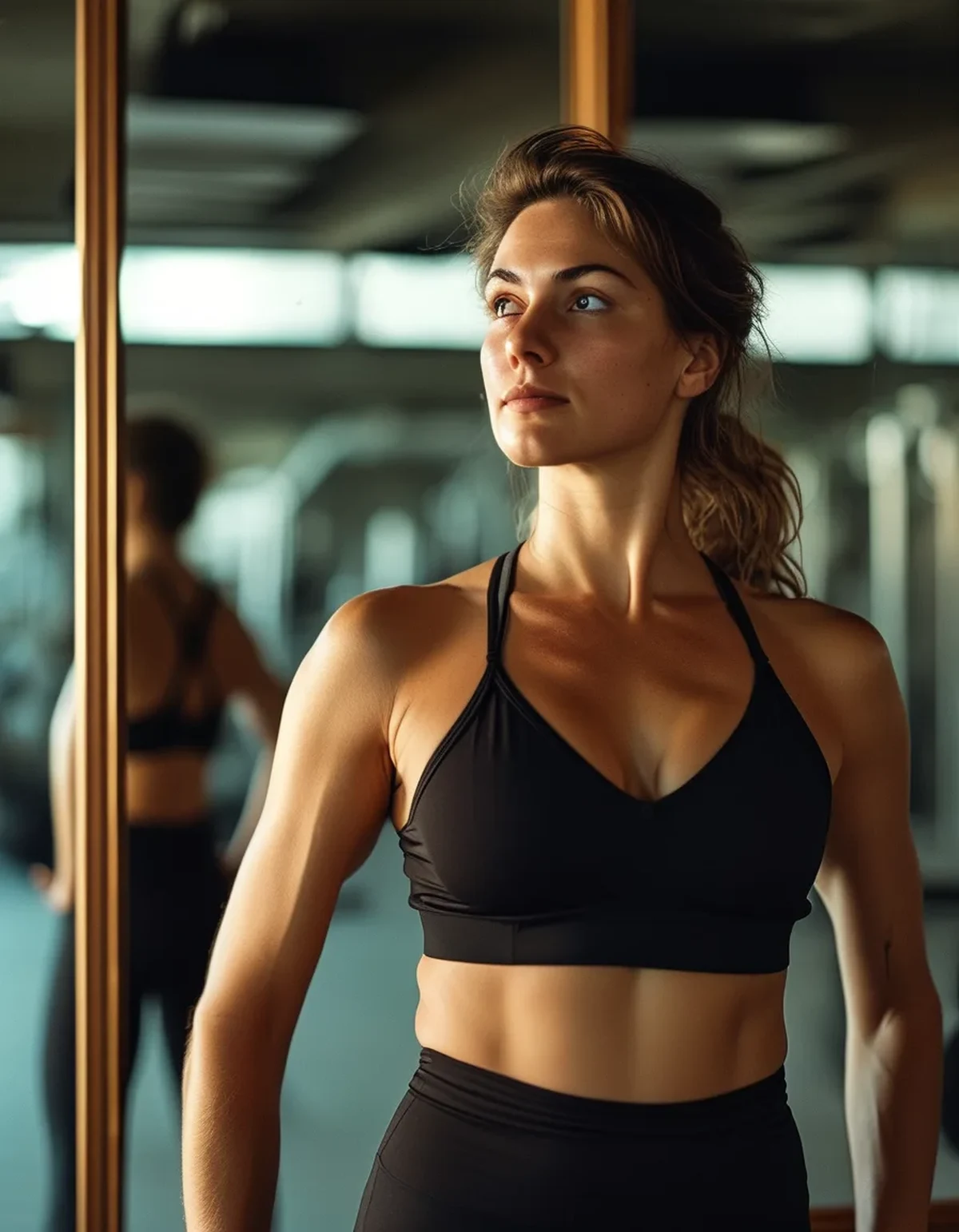
What to use instead, in order of usefulness
1. Video from the front, phone at hip height, 2 to 3 metres back. This is the single best tool and it is free. Front-on video preserves the true orientation and lets you scrub back. Hip height matters — filming from chest or eye height creates its own distortion that reads as asymmetry.
2. Video from directly behind for lower-body work. Hip shift and knee tracking on squats show up far more clearly from behind than from the front, and almost invisibly in a mirror.
3. Flip the photo. Most phone photo editors let you mirror an image in two taps. Flipping a progress photo shows you the version you are used to, and comparing the flipped and unflipped versions side by side is the fastest way to see what is genuinely asymmetric versus what just looks unfamiliar.
4. Fixed landmarks rather than impressions. Instead of asking whether you look even, use references: is the waistband level, are the shoulders the same distance from the ear, does one hand hang lower. Concrete checks survive both reference frames.
5. Someone else’s eyes. A training partner sees the unreversed version by default and has no familiarity bias about your body. This is underrated and costs nothing.
Myth vs Fact: mirrors and your body
Myth: Gym mirrors are distorted on purpose to flatter you. Fact: Large mirrors do sometimes have mild waviness from mounting or manufacturing, and cheap panels bow slightly over time — but the dominant effect is reversal and lighting, not deliberate distortion. If two mirrors in the same gym show you differently, check whether one is bowed by pressing near the edges and watching the reflection.
Myth: If you look symmetric in the mirror, you are symmetric. Fact: You look familiar in the mirror. Those are different findings, and the second one is not evidence of anything.
Myth: Everyone has significant asymmetry, so it does not matter. Fact: Mild asymmetry is genuinely near-universal and usually irrelevant. What matters is asymmetry that is new, that produces pain, or that shows up under load — a hip that shifts consistently at the bottom of a squat is worth addressing regardless of how common asymmetry is in general.
Myth: Photos are the honest version, so trust them completely. Fact: Photos have their own problems — lens focal length, camera height, and a single frozen instant of a moving body. Video from a consistent position beats both.
FAQ: Mirror and Symmetry Questions, Answered
Why does my face look worse in photos than in the mirror?
Same mechanism, plus lens effects. Faces are subtly asymmetric, you know the mirrored version, and short-focal-length phone cameras held close exaggerate whatever is nearest the lens. Stepping back and zooming in produces a far more accurate image than a close selfie.
Should I train without a mirror?
Some coaches recommend it for developing internal feedback, and there is a reasonable argument for it on movements you already know well. For learning a new lift, external feedback still helps — just make it video rather than reflection.
Why do I look different in my home mirror than the gym mirror?
Lighting first, angle second. Overhead gym lighting casts shadows that emphasize different things than the diffuse light in a bathroom, and a mirror leaning even slightly off vertical changes proportions noticeably.
Does the mirror reversal affect progress photos?
Only if you are inconsistent. A mirror selfie compared to a mirror selfie is fine — the reversal is constant. Comparing a mirror selfie to a photo someone took of you is comparing two different reference frames and will look like change that did not happen.
Is one-sided training worth doing about it?
Unilateral work is generally useful for anyone, and specifically useful if a genuine strength difference exists. Confirm the difference with video or a coach before building a program around something the mirror suggested.
TL;DR:
- Mirrors reverse you, and the reversed version is the one you have memorized — real asymmetry reads as normal there.
- Photos look wrong because they show the version everyone else sees and you never have.
- Use front-on and rear video at hip height for anything involving left versus right.
- Flip a photo in your editor to compare the familiar and true versions directly.
- Compare like with like in progress photos; mixing mirror shots and camera shots invents changes.
The mirror is a good tool aimed at the wrong question. It can tell you about depth and bar position all day. It cannot tell you which side is higher, because it has been showing you the other one your whole life.
This is general information, not medical advice.
Keep Reading
This article is for general informational and styling purposes only. Fit, sizing, and product availability may vary.