Why Your Gym Mirror Photos Look Different Than How You Actually Look in Real Life

Quick Answer: Gym mirror photos differ from real-life appearance due to lens distortion at close range, the mirror reversing your image (which changes perceived symmetry), and gym lighting typically being brighter and more directional than everyday lighting — all three effects compound rather than any single one explaining the whole gap.
The photo looks great in the moment. Later, in a different mirror or a different photo, something feels off — and it’s usually all three of these factors at once, not just one.
How does phone camera distance actually distort the photo?
Taking a photo from close range with a phone’s wide-angle lens introduces perspective distortion, subtly widening whatever is closest to the lens and altering proportions compared to how a person actually looks from a normal viewing distance.
Stepping back several extra feet and zooming in slightly, rather than shooting from close range, significantly reduces this distortion effect, producing a photo closer to how you’d actually appear to someone standing across a room.
Why does a mirror reflection look different from a normal photo of yourself?
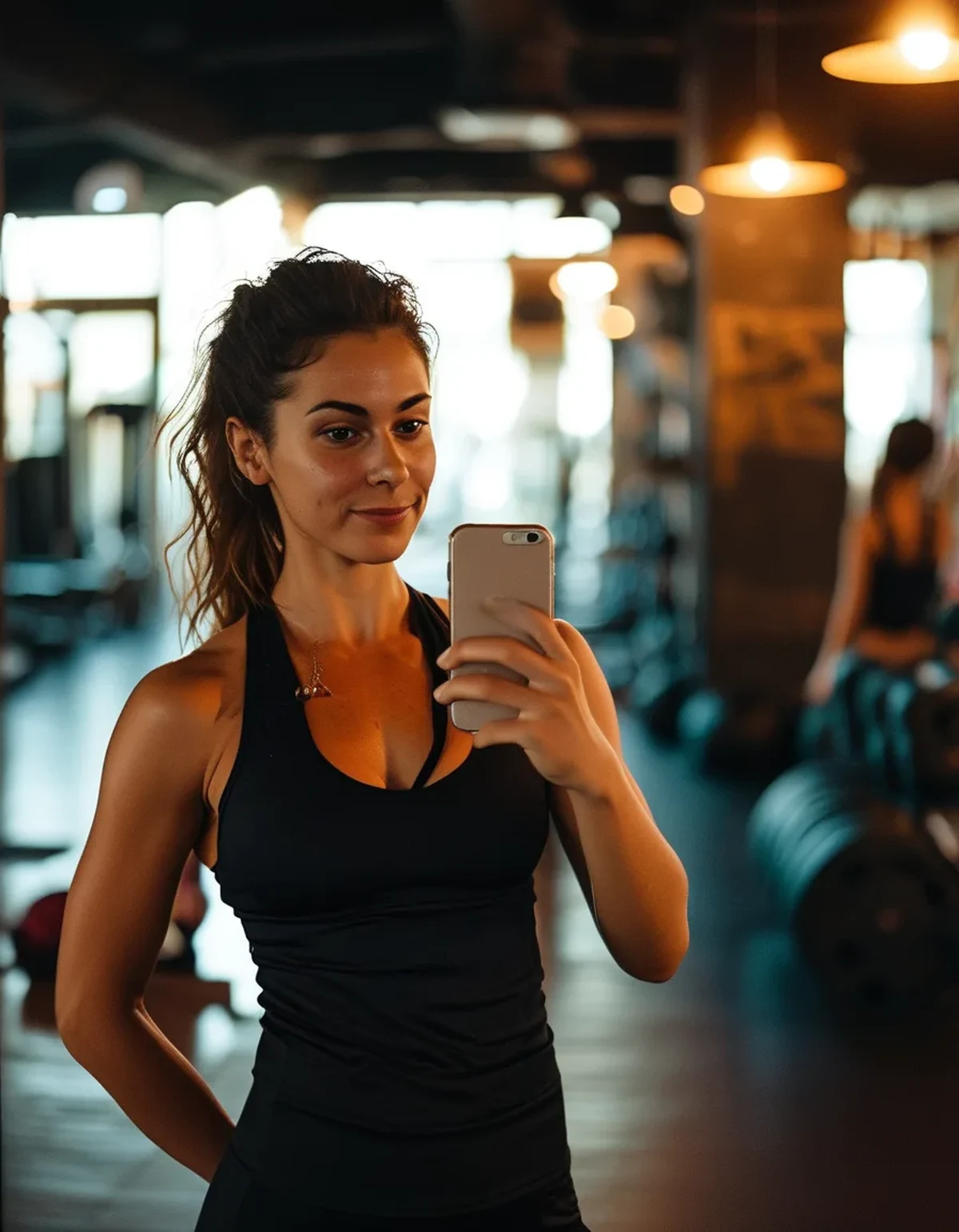
A mirror reverses your image left-to-right, and since human faces and bodies aren’t perfectly symmetrical, this flip changes how proportions and features are perceived — this is part of why people are sometimes surprised by how they look in a regular (non-mirrored) photo compared to their mirror image.
This isn’t a flaw in either version — it’s simply two different, both accurate, perspectives of an asymmetrical subject, which is why neither the mirror image nor the direct photo is more “true” than the other.
How to Set Up Lighting for Workout Mirror Photos That Actually Look Accurate
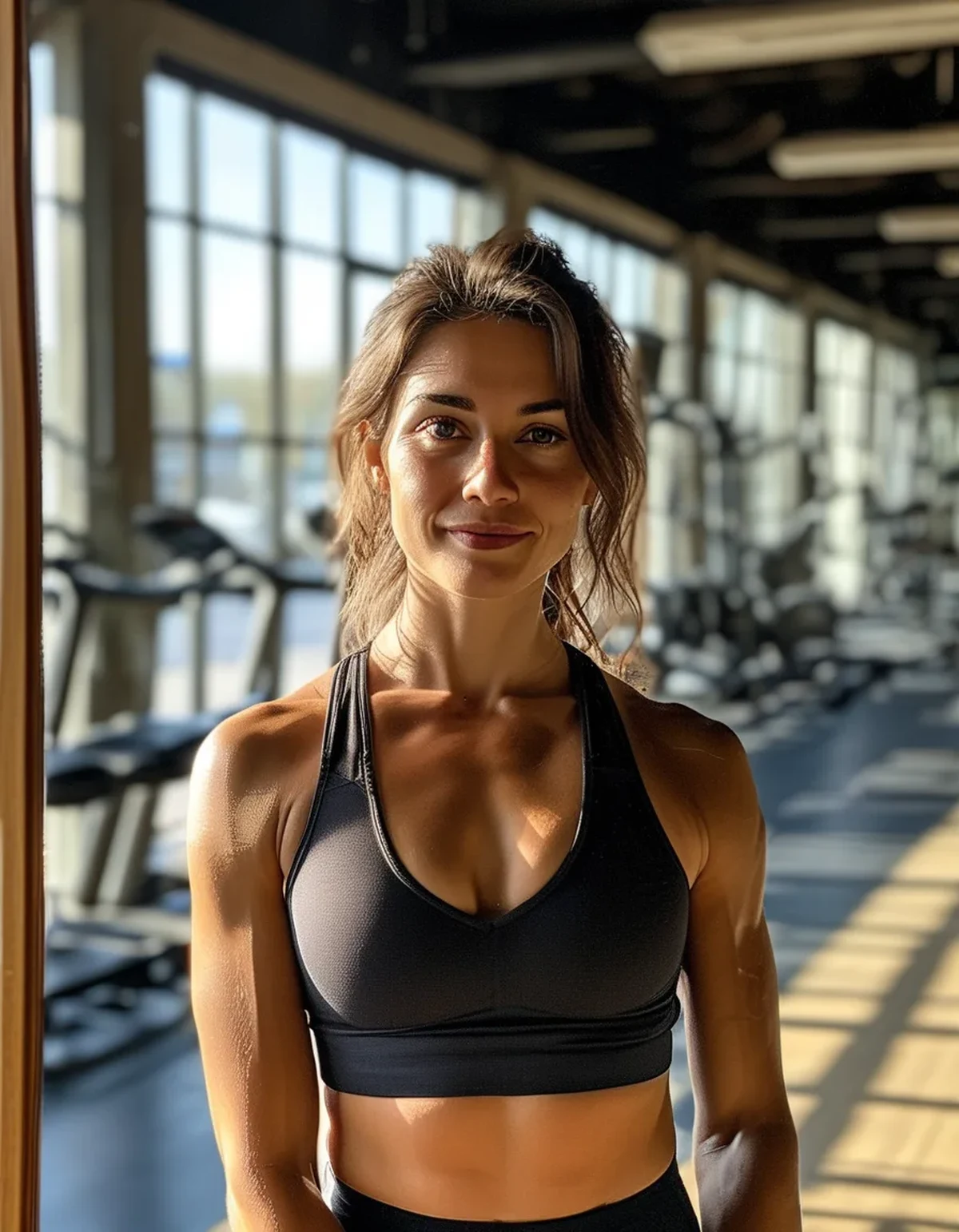
Gym lighting is often brighter and more directional (overhead or side-angled) than typical indoor lighting, which can create shadows that emphasize muscle definition more dramatically than everyday lighting would.
Diffused, more even lighting produces a photo closer to how you’d look in typical daily settings, while dramatic side lighting — flattering as it often looks in the moment — represents a more exaggerated, gym-specific version of your appearance.
Are Smart Fitness Mirrors Actually Worth It for This Kind of Photo Accuracy?
Smart fitness mirrors with built-in cameras are generally positioned and calibrated to reduce close-range distortion, since they’re designed for consistent-distance photo and video capture, which can make progress photos more comparable over time than inconsistent phone selfies.
The consistency of camera position and distance matters more for tracking real physical change over time than any single photo’s absolute accuracy — comparing photos taken under identical conditions removes most of these distortion variables.
FAQ: Gym Mirror Photo Accuracy Questions, Answered
Is there an ideal distance to stand from a mirror for the most accurate photo?
Standing at least 6-8 feet back, rather than a few feet away, meaningfully reduces the wide-angle distortion effect common in close-range gym selfies.
Should progress photos be taken in the same location every time?
Yes — consistent lighting, distance, and mirror angle make progress photos far more useful for tracking real change than varying conditions each time.
Does the distortion effect apply to full-body and close-up shots equally?
Close-up shots (like a bicep flex close to the lens) show more dramatic distortion than full-body shots taken from a greater distance.
TL;DR:
- Close-range phone photos introduce wide-angle lens distortion that widens the nearest features
- A mirror reverses your image, which changes perceived symmetry compared to a direct photo
- Bright, directional gym lighting exaggerates muscle definition beyond typical everyday lighting
- Consistent distance, lighting, and angle matter more for tracking real progress than any single photo
The gap between the gym mirror and everyday reality isn’t really about how you look — it’s about three predictable optical factors stacking on top of each other.
Keep Reading
This article is for general informational and styling purposes only. Fit, sizing, and product availability may vary.