Why Your Mirror Photos Suddenly Look Different in October

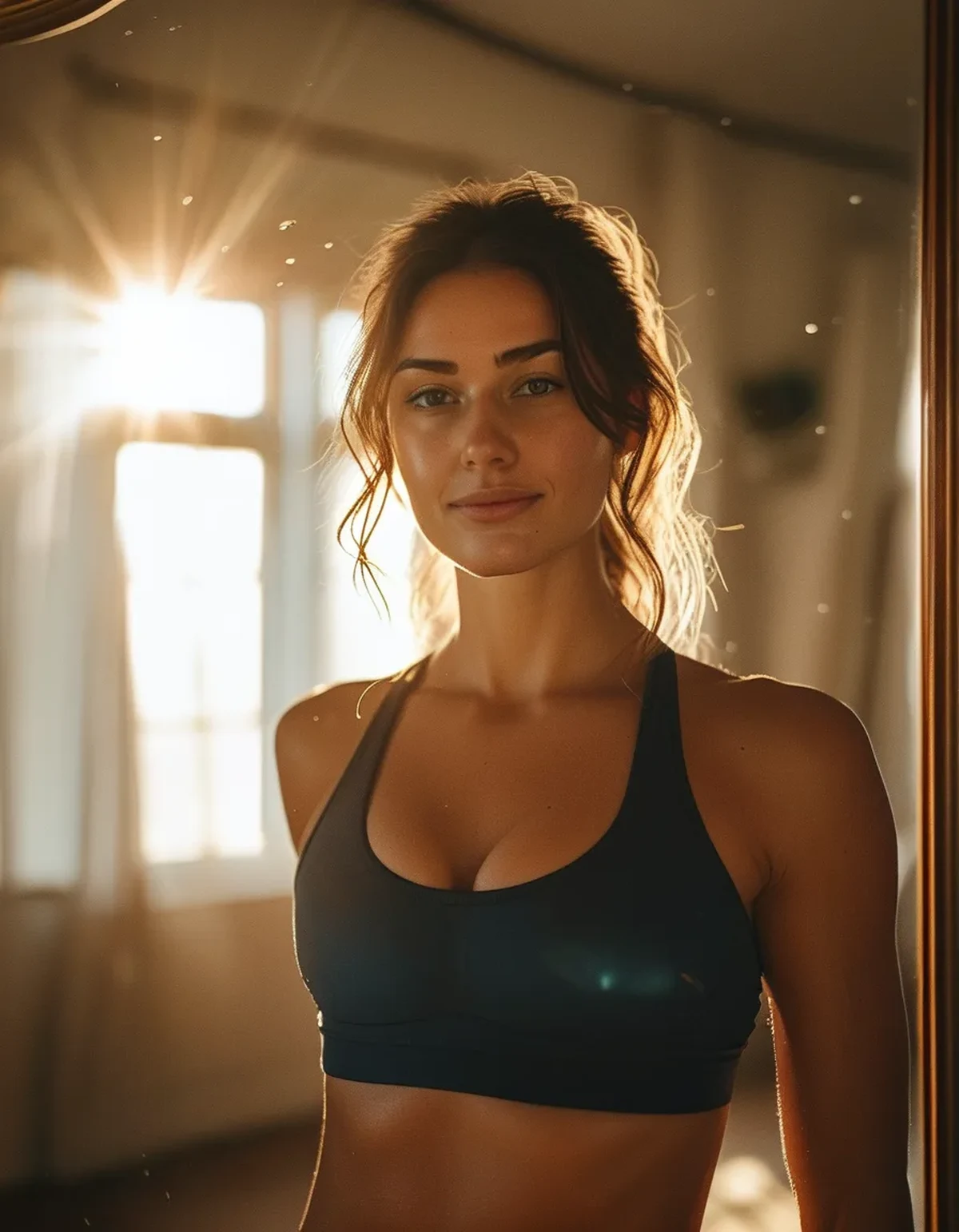
Quick Answer: Autumn changes mirror photos because the sun sits lower, the light gets warmer and more directional, and overcast days scatter it flatly. A lower sun angle means light arrives more horizontally, which lengthens shadows and increases contrast across the body. The same window that gave you soft overhead light in July gives you side light in October — and side light emphasises texture, edges and every fold in the fabric.
You have not changed anything. Same mirror, same leggings, same spot on the floor you always stand on.
And the photos suddenly read harder, moodier and less flattering than the ones from August.
The sun moved. That is the entire explanation, and it is fixable in about a minute.
What actually changes about the light?
Three properties, all shifting at once between late summer and mid autumn.
The sun’s angle drops sharply. At mid-latitudes the midday sun can sit 20 to 25 degrees lower in October than in June. Light through a window arrives closer to horizontal, which turns overhead-ish soft light into directional side light.
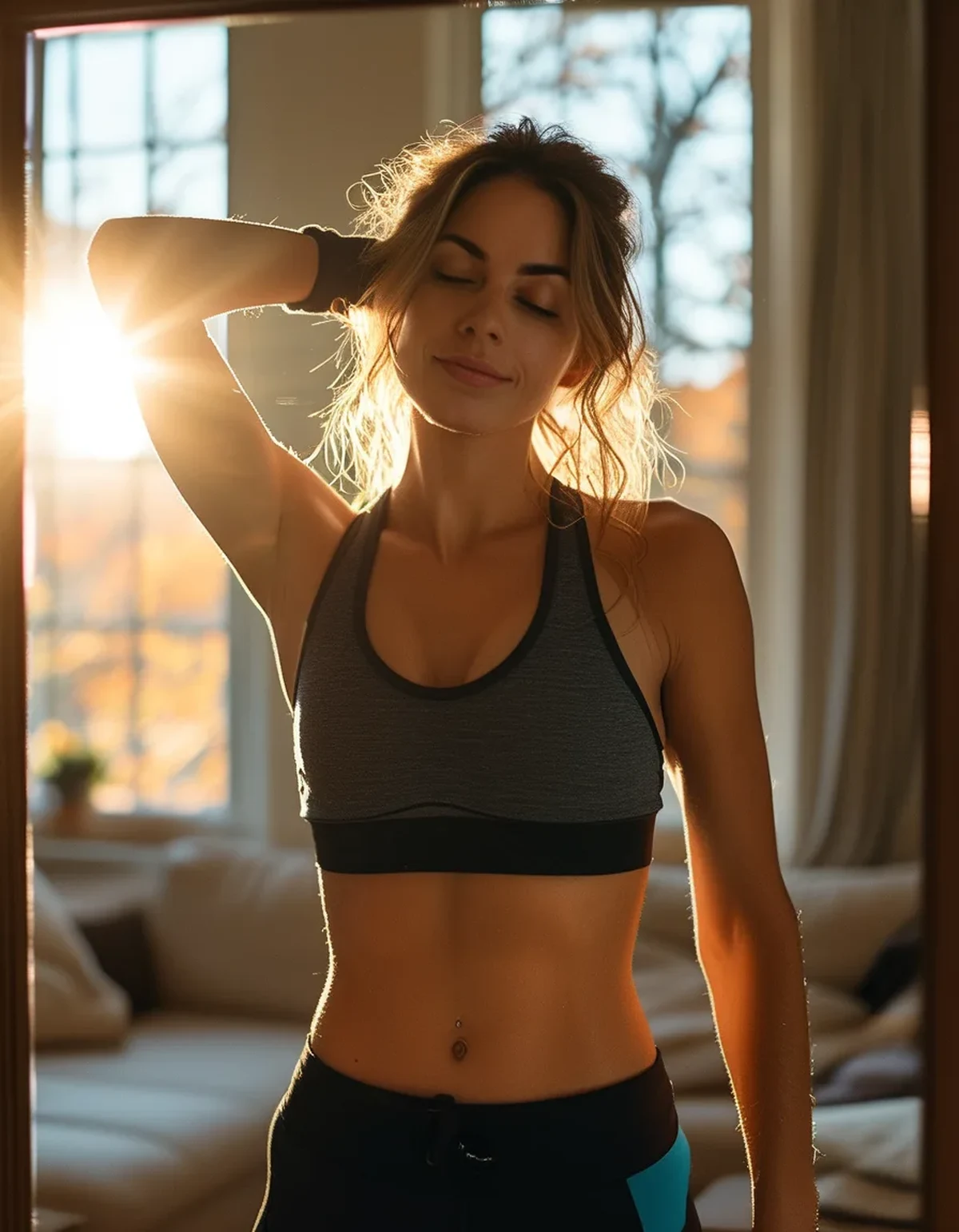
Side light creates shadows across the body rather than under it. Overhead light produces small shadows under the chin and bust. Side light produces long shadows across the torso and legs, which reads as more contrast and more visible texture.
Colour temperature warms and shifts. Low-angle sunlight passes through more atmosphere, which shifts it warmer and more golden. Your phone’s white balance then compensates, often cooling the rest of the room and making skin read oddly.
Overcast frequency increases. An overcast sky is an enormous soft box — flat, even, low contrast. That is genuinely flattering for skin and terrible for showing garment structure, so outfit photos look softer and shapeless.
Indoor lighting starts competing. As days shorten you turn lights on earlier, and mixing 2700K bulbs with 5500K daylight is what creates the colour cast that makes an outfit look like a different colour than it is.
Window direction now matters far more. A north-facing window barely changes across the year. A south or west-facing one changes character completely, which is why one room in your home suddenly photographs badly and another does not.
How do you find the good light again?
Move the shoot, not the outfit. Ten minutes of finding the new spot lasts you the whole season.
Photograph facing the light source, not beside it. If the window is to your side, the shadow crosses your body. Turn so the light is roughly in front of you at 30 to 45 degrees and shadows fall behind.
Move further from the window. Light falls off sharply with distance, and stepping back two metres reduces the contrast between the lit side and the shadow side dramatically. Closer is not better in low-angle sun.
Use a sheer curtain as a diffuser. A single layer of white voile turns a hard directional beam into a soft one. This is the cheapest lighting fix available and it works instantly.
Shoot mid-morning rather than midday in autumn. The best interior light in October is often 9 to 11am, when the sun is high enough to be gentle and the sky is frequently clearer.
Turn the room lights off, or turn them all on. Mixed colour temperatures are worse than either extreme. If you need artificial light, use it as the only source.
Bounce light back with anything white. A white door, a duvet, a piece of card. Placed opposite the window, it fills the shadow side and cuts contrast noticeably.
Lock your white balance if your camera app allows. Auto white balance shifting between shots is why five photos of the same outfit show four different colours.
What does the seasonal light do to outfits specifically?
It changes what your clothes appear to be made of, which matters if you are photographing what you wear.
Texture becomes far more visible. Ribbing, seams, pilling and fabric grain all show under directional light. Something that photographed as smooth in summer will show its knit structure in autumn.
Black reads as more than one black. Low warm light exposes the undertones in dyes, which is why two black pieces that matched under summer light suddenly do not.
Compression garments show every line. Side light picks up the edge of a waistband or a seam through fabric far more than overhead light does.
Light colours blow out more easily. With a bright window in frame, phone metering underexposes the room and overexposes the lit side of a white or cream garment. Tap to expose on the garment rather than the room.
Layering photographs better than it did. The one genuine gift of directional light is that it shows depth. A jacket over a knit over a base layer reads as three distinct pieces in October and as a single blob in flat summer light.
Seasonal note: this is the point in the year to reshoot your reference photos. If you keep outfit photos to remember what works, the ones taken in June will misrepresent how the same pieces look for the next six months.
5 Mistakes People Make With Autumn Mirror Photos
Standing in the exact same spot out of habit. The spot was chosen for summer light. Spend five minutes finding the new one and use it until spring.
Shooting into a bright window. Backlighting turns you into a silhouette and confuses phone metering. The window should light you, not sit behind you.
Leaving overhead lights on with daylight. The mixed colour temperature is what produces the orange-and-blue split you cannot fix afterwards.
Blaming the outfit. Nine times out of ten the garment is identical to how it looked in August. The shadow pattern changed.
Using flash to fix a dark room. Direct phone flash produces the flattest, harshest possible result and shows every fabric flaw. A lamp bounced off a wall is better than flash every single time.
And the one nobody mentions: cleaning the mirror. Dust and smears scatter low-angle light dramatically more than high-angle light, which is why mirrors look filthy in autumn and fine in summer. Thirty seconds with a cloth changes the photo more than any setting.
FAQ: Autumn Mirror Photo Questions, Answered
What is the best time of day to shoot indoors in autumn?
Commonly mid-morning, roughly 9 to 11am, when the sun is high enough to be soft but the light is still strong.
Should I use a ring light?
It solves consistency, which is its real value. Place it slightly above eye level and in front, not directly beside you, or you recreate the side-light problem.
Why does my black gear look grey or brown now?
Low-angle warm light plus auto white balance. Shoot in more neutral light or lock white balance, and the black returns.
Does an overcast day help or hurt?
It flatters skin and flattens outfits. Good for a face-forward photo, less good for showing the structure of what you are wearing.
How do I stop shadows across my body?
Turn so the light source is roughly in front of you at 30 to 45 degrees, and step further from the window.
Is it worth retaking my outfit reference photos each season?
Yes. Two sets, summer and winter, will represent your wardrobe far more accurately than one.
TL;DR:
- The sun sits 20 to 25 degrees lower in autumn, turning soft overhead light into hard side light.
- Side light lengthens shadows and exposes texture — that is why the same outfit reads differently.
- Turn to face the light at 30 to 45 degrees, step further from the window, diffuse with a sheer curtain.
- Never mix daylight and warm bulbs; pick one source and lock white balance.
- Clean the mirror — low-angle light shows every smear.
Find your new spot once in October. It will serve you until spring.
Keep Reading
This article is for general informational and styling purposes only. Fit, sizing, and product availability may vary.